Why Do Whales Breach? The Science and Wonder Behind This Behavior
The ocean holds many mysteries, but few are as breathtaking as the moment a whale launches its massive body out of the water in a spectacular display called breaching. If you have ever been lucky enough to witness this behavior during a whale watching tour, you know it is unforgettable. The sheer power, grace, and joy of a 40-ton humpback soaring above the waves can leave even the most seasoned travelers speechless.
But one question always lingers after the splash: why do whales breach? Scientists have been studying this phenomenon for decades, and while there is no one simple answer, we now understand that breaching serves several purposes. Some reasons are practical, some are social, and some may even be playful. For whale watchers, learning about breaching not only deepens the sense of awe but also reminds us why protecting these animals and watching them responsibly is so important.
What is a Breaching Whale?
A breaching whale is one that propels much of its body out of the water over the ocean before crashing back over the ocean with an enormous splash. It is one of the most dramatic sights in nature, especially because whales can weigh tens of thousands of pounds. To see such an enormous creature leave the ocean, even for just a few seconds, captures the imagination of scientists, conservationists, and tourists alike.
Breaching can happen in different ways. Sometimes a whale twists as it leaps, creating a spinning motion. Other times, it lunges vertically out of the water before falling backward. To whale watchers, it might look like an acrobatic stunt. To scientists, it is a puzzle: what does it mean when a whale breaches? Is it communication, courtship, hunting strategy, or something else entirely? The answer likely lies in a combination of all these theories.

Why Do Whales Breach? The Leading Theories
Whales breach for multiple reasons, and each leap may serve a different purpose. Here are the leading explanations supported by marine researchers.
Communication at Long Distances
When a whale breaches, the resulting splash can be heard for miles underwater. Researchers believe this is one way whales send signals across vast distances. Sometimes it is thought to be a message to nearby pods about food, potential danger, or even a call during mating season.
Parasite Removal and Body Care
Another theory is that whales breach to rid themselves of parasites or barnacles. Smacking their huge bodies on the surface may help dislodge unwanted hitchhikers from their skin.
Social Behavior and Mating Displays
Some breaches may be a display of strength, especially during mating season. Males competing for female attention often perform dramatic surface behaviors like tail slapping or breaching. It may be the whale equivalent of a bold performance.
Navigation and Orientation
Breaching may also help whales orient themselves. By leaping out of the water, they may gain a brief aerial view of their surroundings, useful during long migrations when whales travel thousands of miles. Also, breaching produces such loud sound waves that bounce on their surrounding and through the echoes whales can develop acoustical images of their whereabouts that will help orient themselves and recognize geographical features underwater.
Energy and Play
And finally, yes, do whales breach for fun? Many scientists believe so. Observations suggest that breaching sometimes happens in contexts that do not relate to food, danger, or mating. It may simply be play, expression, or a joyful release of energy.
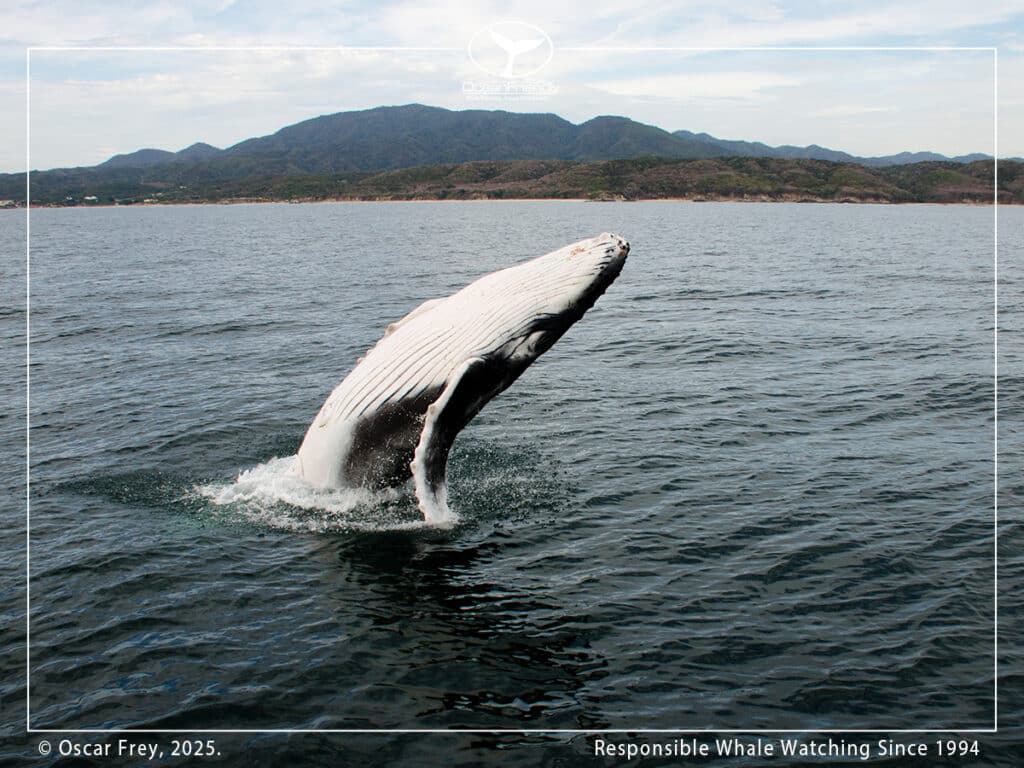
Why Do Humpback Whales Breach?
If there is one species that has made breaching famous, it is the humpback whale. Whale watchers around the world eagerly hope to see this acrobatic giant leap out of the ocean, and for good reason. Humpbacks are by far the most acrobatic of all whale species and the one that most frequently breaches. Their spectacular acrobatic performances are a highlight of any responsible whale watching tour.
How Often Do Humpback Whales Breach?
Researchers and tour operators have observed humpbacks breaching many times in a single day. How often do humpback whales breach? The answer depends on factors like location, season, and social context. In feeding areas, breaching may occur regularly as part of communication or coordination among whales. In breeding grounds, males may breach repeatedly as a display of strength or dominance. Even young calves are known to breach as they practice movements and build muscle strength.
Why Are Humpbacks More Acrobatic?
Several factors make humpbacks the most dramatic performers and the most acrobatic. Their long pectoral fins give them unique maneuverability, allowing for higher and more graceful breaches. Their social nature also means they use surface behaviors like breaching, flipper slapping, and tail slapping to communicate. Because of this, why do humpback whales breach becomes a question that has many answers: they may leap to attract mates, to signal other whales to their pod or simply because they can. Also, it may be done to create such a loud sound that bounces on their surrounding and through the echoes whales can develop acoustical images of their surroundings that will help orient themselves or locate other whales.
Do Humpback Whales Breach at Night?
The question of whether humpback whales breach at night has intrigued researchers. Evidence suggests that they do, particularly during migration. Acoustic studies have recorded breaching sounds after dark, and tour operators in some regions have reported night-time activity. While more difficult to observe directly, it is clear that humpback breaching is not limited to daylight hours. One explanation is that the sound waves produced by slapping their bodies over the ocean´s surface bounce on their surroundings and they can develop acoustical images of their whereabouts and at the same time locate other whales and signal to them.
Humpbacks remind us that breaching is not just a behavior, but a language of the ocean and a form of communication. Each leap can carry meaning, strength, and beauty, making them the perfect ambassadors for the wonder of whale watching. When breaching is done repeatedly with a frequency it is not unusual to observe another whale in the vicinity replying to it and slowly coming close together. This is what we refer to as percussive communication.
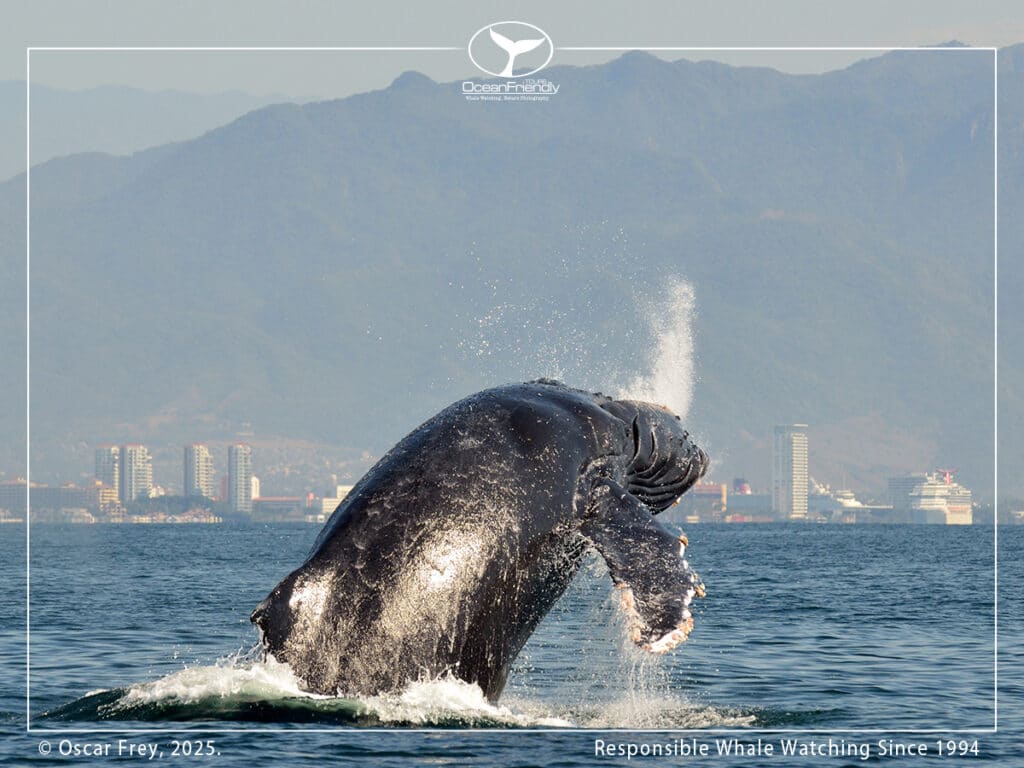
Do All Whales Breach?
Not all whales breach, and some species are more inclined to do so than others. Do all whales breach? The answer is no, but most species are capable of it.
Humpback whales are the most common breachers, delighting tourists with repeated leaps.
- Gray whales also breach, particularly during migration. They are often seen spy-hopping and surfacing dramatically.
- Blue whales, the largest animals on Earth, rarely breach, but documented cases exist. Their immense size makes it more difficult.
- Orcas (killer whales) are highly acrobatic and often breach, sometimes repeatedly.
So while not every species breaches as often as humpbacks, the behavior is widespread across the whale family.
Whale Breaching and Human Interaction
One of the most common questions whale watchers ask is, why do whales breach near boats? Sometimes it appears that whales breach deliberately close to humans. While the exact motivation is unknown, scientists suggest several possibilities.
Some believe whales are simply curious. Boats and their sounds may attract their attention, leading to surface behaviors. Others think it may be coincidence, since whales are constantly moving and breaching in many areas. In rare cases, breaching near vessels may be a form of communication, especially in noisy marine environments.
Regardless of the reason, it is critical that tour operators respect whales and keep a safe distance. At Ocean Friendly Tours, we practice responsible whale watching and every sighting happens under the whales´ terms. Our small group tours on board customized fiberglass boats with four stroke engines ensure that guests enjoy the thrill of seeing breaching whales without disturbing their natural behavior.
Do Whales Breach at Night?
Another frequent question is whether whales breach when humans are not watching. Do whales breach at night, the answer appears to be yes. Acoustic monitoring and night surveys suggest that whales do breach after dark, although it is harder to observe directly.
For humpbacks in particular, scientists have recorded breaching and other surface behaviors at night, especially during migration. This fact supports the idea that breaching serves important communication and orientation functions that continue around the clock.
Do Whales Breach for Fun?
Do whales breach for fun? This is one of the most delightful questions in whale biology, and many researchers believe the answer is yes. Whales have been observed breaching repeatedly when no clear environmental trigger is present.
Young whales, in particular, seem to breach more often, which supports the idea that they are practicing motor skills, gaining strength and coordination or simply playing. Just as dolphins are known for their joyful leaps, whales may breach as a form of expression.
This perspective adds even more wonder to whale watching. If whales breach partly for the joy of it, then watching them doing it becomes a shared moment of happiness between humans and these ocean giants.

What Does It Mean When Whales Breach?
When people ask, what does it mean when a whale breaches, they are really asking about interpretation. The truth is that the meaning can change depending on the context.
- In feeding areas, it may signal food locations.
- In mating areas, it may be part of competition or courtship.
- During migration, it may aid in navigation.
- At other times, it may simply be play.
The breach of a whale is a reminder that these animals have complex behaviors and communication system that are not always easy for humans to categorize.
Ethical Whale Watching and Breaching in Mexico
Witnessing a whale breach is one of the most powerful experiences in nature. But how we choose to watch matters just as much as what we see. Ethical whale watching ensures that these animals are not disturbed or stressed by our presence.
At Ocean Friendly Tours in Mexico, we put conservation and respect first. Our tours are designed to provide guests an educational experience and the thrill of observing whale´s behaviors such as breaches under the whales´ terms. With small group sizes, safe viewing distances, and expert naturalists, every tour becomes a lesson in marine stewardship.
When you see a whale breach with Ocean Friendly Tours, you are not just witnessing a spectacle. You are participating in a form of eco-tourism that supports healthy oceans and sustainablility.
The Beauty and Purpose Behind Every Leap
So, why do whales breach? The reasons are as varied as the whales themselves. Breaching can serve the purposes of communication, orientation and navigation, mating behavior, parasite removal, or simply play. For humans, it is one of the greatest privileges of being at sea.
By choosing responsible eco-tourism with Ocean Friendly Tours, you not only get the chance to witness this unforgettable behavior but also help protect the whales and their habitats. Watching whales breach is a gift, and preserving that gift for future generations is the heart of our mission.
FAQs About Whale Breaching
Do all whales breach?
Yes, all whales are capable of breaching, but not all whales breach frequently. Humpback whales are by far the most common breachers, while species like gray whales, orcas, and even the massive blue whale have also been observed leaping from the water on rare occasions.
How often do humpback whales breach?
Humpback whales breach more often than any other species, sometimes dozens of times in a single day. The frequency depends on factors like social interaction, feeding or breeding seasons, but they remain the most reliable whales for tourists hoping to see a breach.
Do whales breach at night?
Whales do breach at night, although it is harder to observe directly. Researchers using acoustic monitoring have recorded breaching sounds after dark, and humpback whales in particular have been observed breaching during migration even without daylight.
Why do whales breach near boats?
Whales sometimes breach near boats out of curiosity, as a coincidence during their natural behavior, or as a way to communicate in noisy environments. While the exact reason is not always clear, responsible tour operators ensure that safe distances are maintained so the whales are never disturbed or pressured.